Technology
Take the cable off the instrument
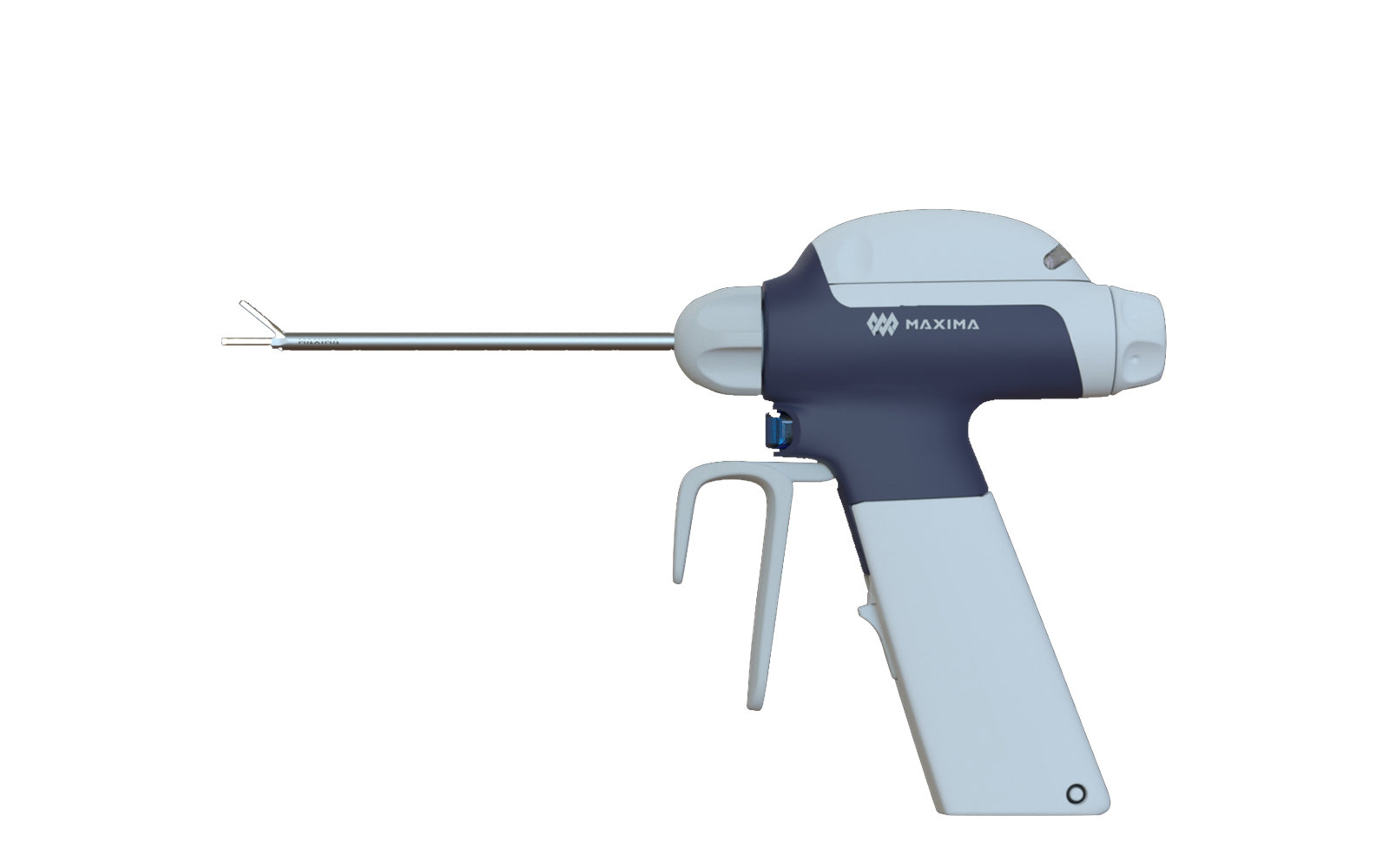
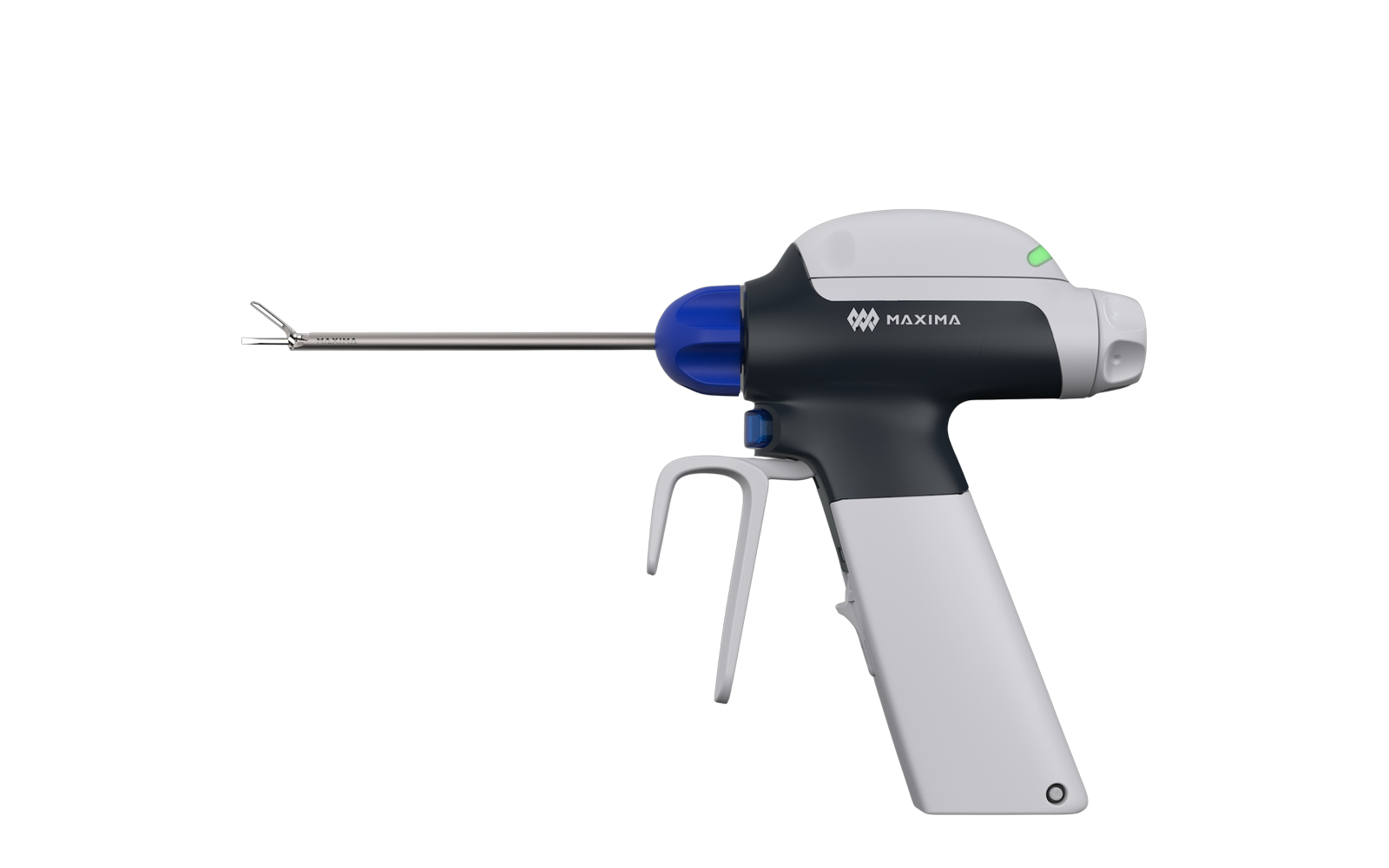
Transducer, power supply and function — all in the surgeon's hand. The instrument travels with the surgeon; the generator no longer takes up the room.
A conventional ultrasonic scalpel is coupled to an acoustic transducer handpiece, which is tethered via a 2.7-meter cable to a generator positioned on a mobile equipment cart outside the sterile field. We made the instrument itself a complete system.
01 CordlessIntegrated cordless design
Generator, battery and control board are all inside the handpiece. No cable, no cart. This is a structural consequence, not a marketing line.
02 Six variantsSix device models
Straight (UDA13/26/39) × curved (UDA13C/26C/39C). Length maps to surgical depth: 13 cm superficial, 39 cm advanced laparoscopy.
03 Build vs buySelf-developed vs re-engineered
Ultrasonic frequency-tracking algorithms and jaw structure are in-house; mechanical parts and supply chain integrate 30+ precision machining and semiconductor suppliers. This is our cost structure.
04 Two platformsTwo product platforms
Platform 1 (Gen 1 / Gen 1.5) — clinically validated and the mainstay of the Taiwan market. It uses the low-temperature plasma route (generator and battery rated for 100 resterilization cycles) and covers six device models (straight / curved × 13 / 26 / 39 cm). All >7,000 clinical cases belong to this platform; it is shipping and in use today.
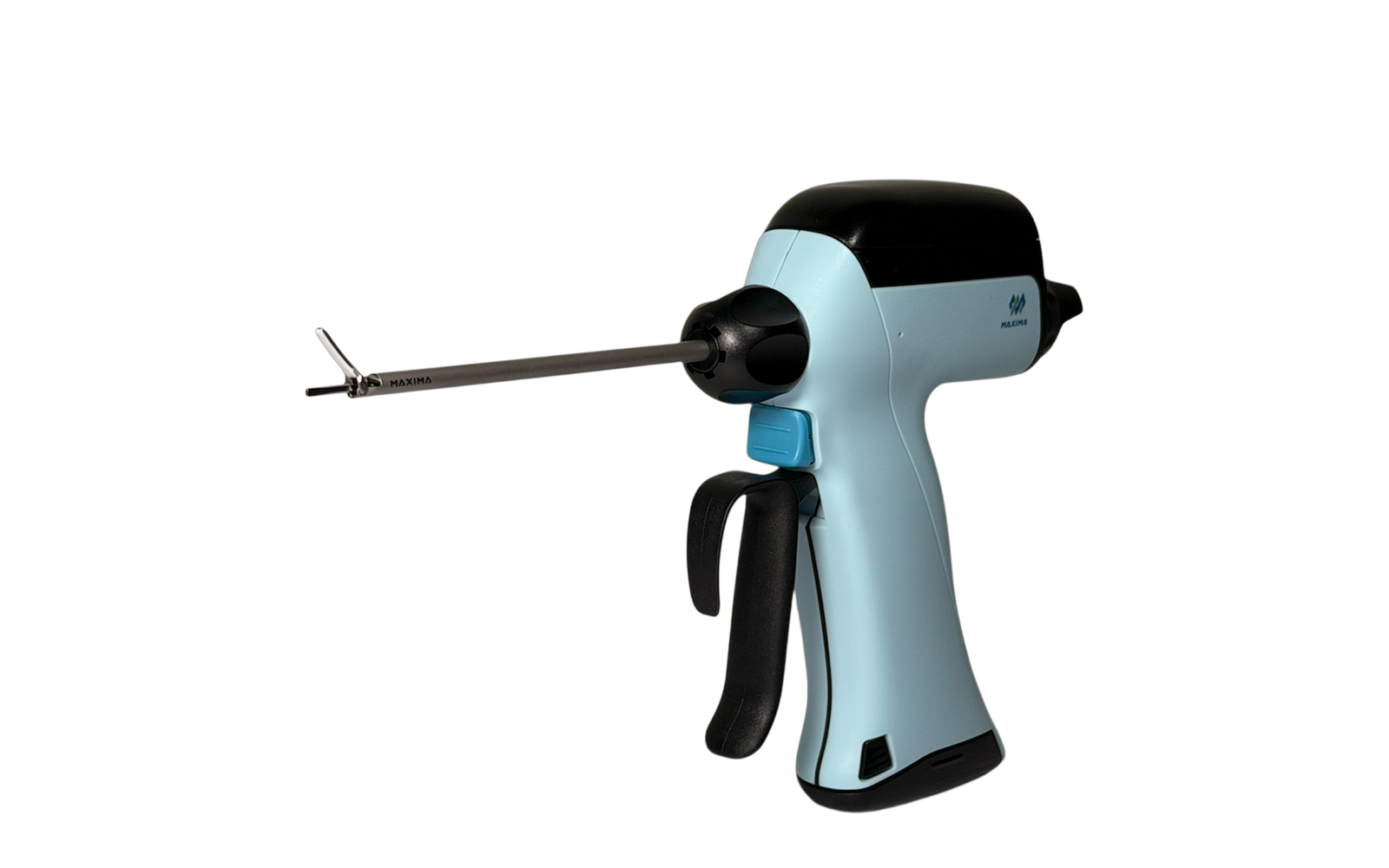
Platform 2 (MAXXONIC) — benchmarked against the latest generation from global Tier-1 manufacturers and aimed at the 59 markets outside Taiwan. It moves to the autoclave route (generator and introducer 150 cycles; battery needs no sterilization and lasts 200 cycles), with a built-in torque wrench; the US 510(k) has been filed.
05 Platform 1Platform 1 optimization upgrades
On Platform 1, the Gen 1.5 system carries forward the stable performance of the Gen 1 reusable generator and battery. Its instruments are disposable and EO sterilized, and are upgraded with the in-house clamping module with curved jaw, comprising: curved tip design, enhanced clamping force, dolphin-nose tip, reinforced toothed pad and self-opening jaw; plus a generator and battery stability upgrade, a battery safety barrier and four-point overmoulded support for the inner core.
06 Platform 2Platform 2 benchmarked against the majors
Platform 2 is benchmarked against the performance and design of the latest generation from global Tier-1 manufacturers. It comprises: instruments carrying the in-house clamping module with curved jaw (disposable, EO sterilized); the generator (150 autoclave cycles); the battery (200 recharge cycles, not sterilized); and the sterile transfer tool (autoclave). The instrument has a built-in torque wrench that keeps installation torque between the generator and the instrument’s inner waveguide rod precise and consistent, preventing instrument damage or energy-transfer failure from over- or under-tightening.
Regulatory and evidence status: the US 510(k) K263177 was filed on 2026-09-11, SE review estimated 2026-11-10, final MDUFA decision estimated 2026-12-10; the EU application is in progress.
07 Next GenThe route to the next generation
Direction 1: make failure detectable. Public recall records show how devices actually fail in use: ultrasonic energy devices from the established brands account for 10 recalls or removals. The largest covered 886,628 units (2024-11-25; probe tips breaking, pads detaching). What this yields: mechanical failure, unintended energy activation and detached consumables, in that order — detect the anomaly as it happens, make unintended activation impossible, make consumable life predictable.
Direction 2: sterilization route and energy management. Across the 276 de-duplicated family members, filings concentrate on sterilization, battery and energy management; the Gen 2 ceiling falls on 2028-12-01 and the Gen 1 battery-assembly patents run to 2031-08-25. What this yields: the autoclave route Platform 2 has taken is the right one (generator and introducer 150 cycles; battery 200 cycles, not sterilized); the next stage is more predictable energy and charge management.
Direction 3: less heat, closer to the procedure. Measured in vivo, lateral thermal damage was 215.79 µm for monopolar electrosurgery versus 90.42 µm for the ultrasonic device; 5 meta-analyses agree operating time falls by 18.7–23.1 minutes, and Gen 2 heat build-up is already 20% below Gen 1. What this yields: the heat must go lower still; shaft length (13 / 26 / 39 cm), clamping force and power curve must be configurable by specialty.