MAXIMA BIOTECHMaxima Biotech · Investor RelationsPublic · Investors中文EN
Clinical Evidence
>7,000 cases of real-world data
Every piece of surgeon feedback becomes a design specification for our engineering team.
Real-world evidence is not a marketing phrase. It accumulates a little every day across 80 hospitals. The first thing it told us: which specialties use it most.
>7,000Total casesCumulative to January 2025. All first-generation straight jaws.
80+HospitalsAll levels, including 20+ medical centers.
9SpecialtiesGeneral surgery largest at 31%, followed by colorectal 19% and obstetrics & gynecology 13%. Shares total 100%.
01 Thermal safetyThermal safety is the core claim
The PTFE tissue pad in the jaw has a melt point of 327°C. Gen 2 measures ~240°C, leaving 87°C of margin. This is why the entire range sits far below the melt point.
02 ANOVACross-generation statistics
One-way ANOVA with Tukey HSD (α=0.05): Gen 2 shows no statistical difference in thermal accumulation versus the peer product (p=0.527), and is significantly better than its own predecessor (p<0.001).
03 Animal studyThermal spread, animal study
61 vessels, mean 2.79±0.98 mm, cutting time 5.46±1.98 s. Stated plainly: this is an ex vivo / animal study, not a human controlled trial. We do not claim human equivalence.
04 LimitationThe limitation must be stated
All >7,000 cases and 80 hospitals belong to first-generation straight jaws. Curved jaws (UDA13C/26C/39C) and Gen 2 MAXXONIC have no clinical usage evidence yet. Any citation must carry this limitation.
Representative Surgical Procedures
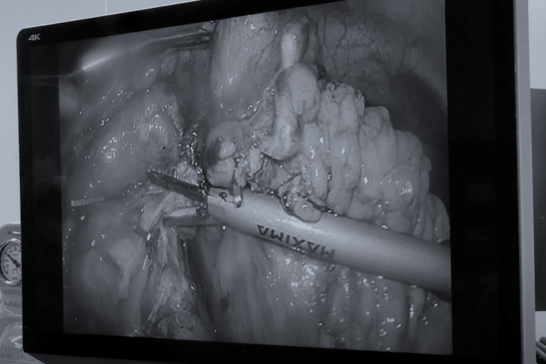
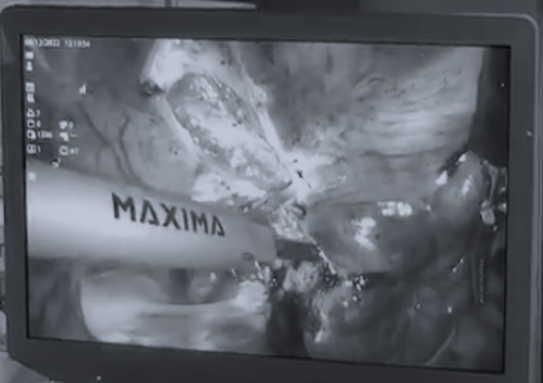
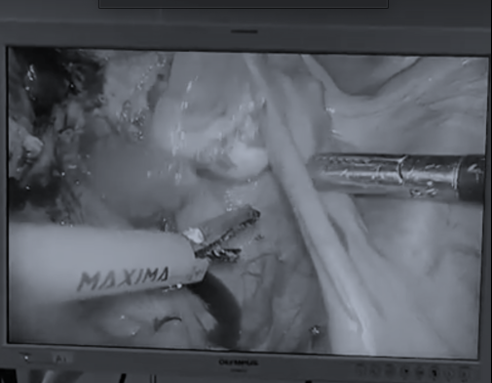
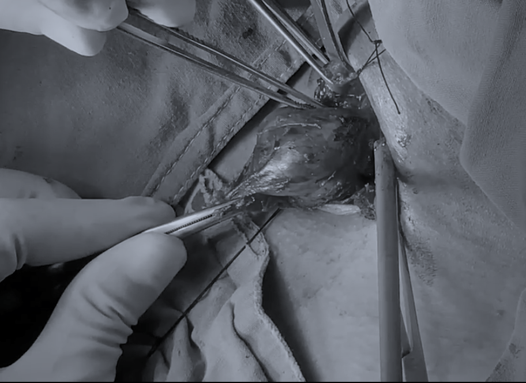
The six diagrams below cover the main application settings within Maxima's 9 clinical specialties.
1 General surgery 31%HPB · thyroid · GI (largest share)
2 Colorectal surgery 19%rectal · intestinal procedures
4 ENT 10%ear · nose · throat and head & neck procedures
5 Breast surgery 9%mastectomy · superficial
6 Trauma / emergency surgery 6%emergency and trauma care
7 Other specialties 6%aggregate category
8 Urology 3%renal · prostate procedures
9 Thoracic surgery 3%intrathoracic procedures
General surgery — procedure mix
Liver 36.7% · thyroid 15.8% · appendix 13.5% · gallbladder 12.2%. Labeled procedures total 87.5% — one platform covering the full procedure spectrum, not a single-point product.
Colorectal surgery — procedure mix
Hemorrhoid 52.5% · rectal 29.5% · intestinal 16.1% (total 98.1%). From day-case hemorrhoid surgery to rectal oncology — one device covers it all.
Procedure shares come from the 2025-05-28 clinical-usage statistics (a separate reporting date, percentages only); the specialty distribution above uses a different basis (statistics as of January 2025). Each closes on its own; the two must not be cross-computed.
Full distribution across the 9 specialties (3,122-case basis, statistics as of January 2025): general surgery 31% (972 cases), colorectal 19% (584), obstetrics & gynecology 13% (399), ENT 10% (296), breast 9% (296), trauma / emergency 6% (188), other 6% (178), urology 3% (108), thoracic 3% (101) — percentages total 100% and cases total 3,122; both close exactly. The top three account for 63% / 1,955 cases; the remaining six for 37% / 1,167 cases.
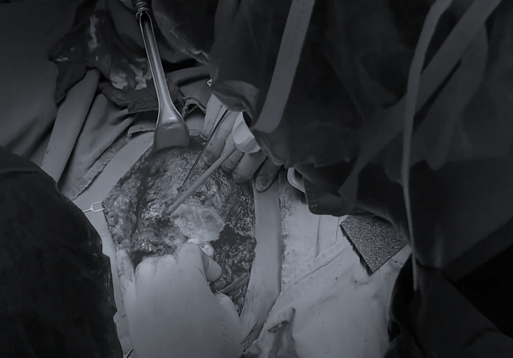
Gastric resectionGeneral / GI surgery — primary use of the 39 cm instrument.Minimally invasive abdominal wall (LABH)Hernia repair via minimally invasive approach.AdhesiolysisIntra-operative adhesion separation, reducing thermal spread risk.ThyroidectomyThyroid — 13 cm short instrument, superficial application.BABA minimally invasive thyroidectomyAxillo-breast approach, cosmetic minimally invasive.MastectomyBreast — superficial application.
Full 9-specialty distribution, all ANOVA pairings and animal-study groups are provided in the due-diligence data room (this page does not link to the internal version).